Do Bears Eat Foxes? Unraveling the Mysteries of Bear Diets
Contents
- What Bears Eat: Omnivorous Opportunists
- Plant Material
- Fish
- Insects
- Small Mammals
- Do Bears Eat Foxes?
- Bears Likely to Eat Foxes
- Brown Bear (Ursus arctos)
- Polar Bear (Ursus maritimus)
- Black Bears
- Grizzly Bear
- What Eats a Fox? Common Fox Predators
- Eagles (e.g., Golden Eagles)
- Mountain Lions (e.g., Cougar)
- Owls (e.g., Great Horned Owls)
- Wolves (e.g., Gray Wolves)
- Leopards (e.g., African Leopards)
- Wolverines (e.g., North American Wolverines)
- Bobcats (e.g., North American Bobcats)
- Coyotes (e.g., Eastern Coyotes)
- Foxes
- Conclusion
- FAQs
- Will a polar bear eat a fox?
- Do brown bears eat foxes?
- Can wolves eat foxes?
- Sources
Some bears may eat foxes, although they aren’t their primary diet. These powerful creatures have omnivorous habits, consuming many foods, from berries and plants to fish and small mammals.
One question in discussions about bear diets is how do bears eat foxes, yet we know these foxes are agile and cunning.
In this article, we’ll explore the intriguing relationship between bears and foxes and shed light on the circumstances under which bears might consume these cunning canids.
What Bears Eat: Omnivorous Opportunists
Before we delve into the topic of bears and foxes, it’s essential to understand the dietary preferences of bears. Bears are opportunistic omnivores. Therefore, they have a flexible diet. What they eat depends on season, location, and food availability. The primary components of a bear’s diet include:
Plant Material
Bears graze on grasses, berries, nuts, and roots. Many bears in North America primarily feed on plant matter, particularly during the spring and summer when vegetation is abundant.
Fish
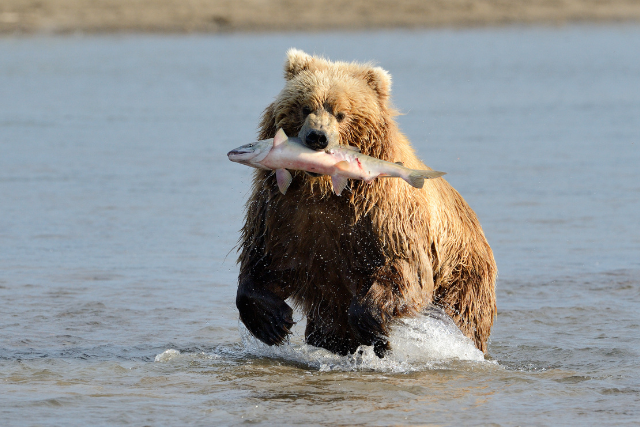
Bears in regions with access to water bodies like rivers and streams are skilled fishers. They often target salmon and other fish species, providing an essential protein source.
Insects
During the warmer months, bears can spend significant time foraging for insects, especially ants and termites.
Small Mammals
While bears generally prefer plants, fruits, and fish, they can consume small mammals like rodents if the opportunity arises.
Do Bears Eat Foxes?
Now, let’s address the central question. While it’s not common for bears to actively hunt and consume foxes, there have been cases of bears preying on foxes in the wild. However, these instances are relatively rare and usually occur under specific circumstances.
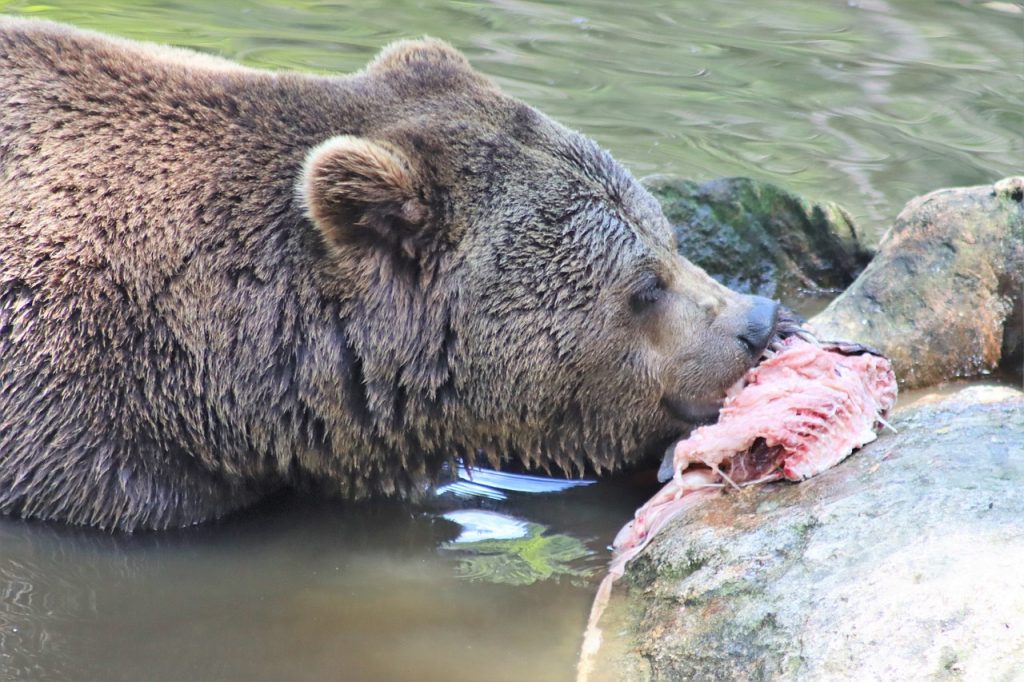
For example, bears are more likely to encounter the remains of a fox that has died of natural causes or killed by another predator. In such cases, bears may scavenge the carcass for an easy meal.
A bear may prey on a fox in certain situations. For example, when a fox is vulnerable because it’s sick or injured or a bear is starving. Some bear species, like the grizzly bear, are more predatory than others. Hence, if such a bear encounters a fox while actively hunting for small mammals or other prey, it might attempt to catch and consume the fox.
Bears Likely to Eat Foxes
Brown Bear (Ursus arctos)
It has an omnivorous diet, which means it consumes a wide range of foods. The diet primarily consists of plants, berries, nuts, fish, and small mammals.
However, brown bears are opportunistic predators and hunt or scavenge when possible. While they don’t actively search for foxes, they may consume foxes if they encounter them in the wild.
In rare cases, if a bear perceives a fox as a threat or competitor, it may attack and consume it.
Polar Bear (Ursus maritimus)
This fox predator feeds on seals. However, due to the mutual Arctic habitat, it may occasionally encounter an Arctic fox. Further, polar bears scavenge carcasses and may consume the remains of foxes or other animals that have died in the harsh Arctic environment.
In practice, the relationship usually runs the other way. Arctic foxes often follow polar bears and scavenge the remains of their seal kills, and a polar bear catching a fox is rare.
Black Bears
Yes, a black bear may consume red foxes on occasion. Black bears are opportunistic omnivores, and while they primarily feed on plant matter, fruits, and small mammals, they can scavenge or actively prey on foxes. However, it’s important to note that black bears don’t specialize in fox hunting, and such interactions are relatively infrequent.
Grizzly Bear
The National Wildlife Federation describes it as a subspecies of brown bear. Its omnivorous diet is mostly vegetation in many inland areas, plus berries, insects, fish, small mammals, and sometimes larger mammals like elk and moose. However, in rare circumstances, grizzly bears might consume red foxes, especially if they encounter a fox and perceive it as potential prey or if they come across a fox carcass.
Such interactions with foxes are infrequent and may occur when other food sources are scarce or during territorial conflicts.
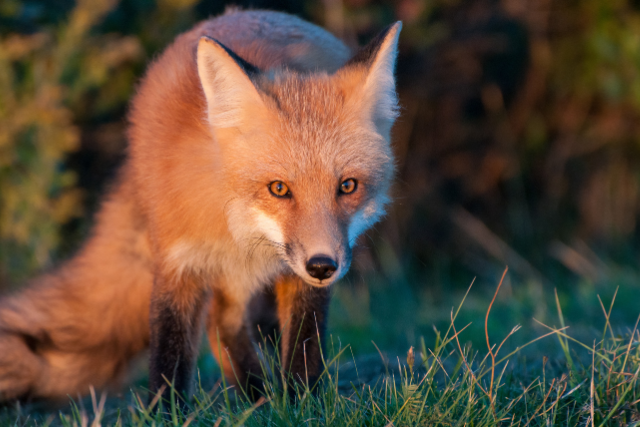
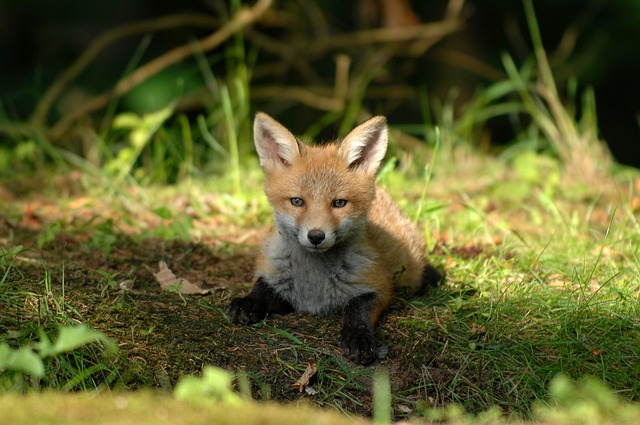
Although the red fox is the largest of the fox species, it’s no match for male or female bears. Red foxes measure up to about 35 inches, not counting the tail, and usually weigh 15 pounds or less, while male grizzlies average 400 to 600 pounds.
What Eats a Fox? Common Fox Predators
Since we’ve mentioned that bears eat foxes occasionally, what hunts foxes more? Here is a list of fox predators.
Eagles (e.g., Golden Eagles)
Eagles are formidable avian predators known for their eyesight and powerful talons. They target smaller mammals, birds, and fish, but some eagle species, like the golden eagle, prey on foxes. Young foxes near the den are the most vulnerable.
Mountain Lions (e.g., Cougar)
Mountain Lions are solitary predators that primarily prey on adult deer and other ungulates. However, they have been documented hunting and consuming foxes, particularly in regions where their habitats overlap, such as the Western United States.
Owls (e.g., Great Horned Owls)
Great horned owls are skilled nocturnal hunters that can take a variety of prey, including mammals. They prey mainly on young foxes, including gray fox kits, using their silent flight and sharp talons.
Wolves (e.g., Gray Wolves)
Gray wolves are apex predators known for their cooperative hunting strategies. While they prefer larger prey like deer and elk, they may occasionally kill red foxes, which compete with them for food, when the opportunity presents itself.
Leopards (e.g., African Leopards)
In regions where foxes coexist with larger predators like leopards, these big cats may occasionally hunt and consume foxes. African Leopards, for example, include mammals, like foxes, in their diet.
Wolverines (e.g., North American Wolverines)
Wolverines are known for their strength and ferocity. They feed on carrion and small mammals, making them potential predators of foxes. As such, wolverines may scavenge the remains of foxes killed by other predators.
Bobcats (e.g., North American Bobcats)
Bobcats are skilled hunters and opportunistic carnivores. They often target smaller mammals and birds, including fox species like the gray fox. They rely on stealth and agility to ambush their prey.
Coyotes (e.g., Eastern Coyotes)
Coyotes are opportunistic omnivores that have a varied diet. They compete with and sometimes prey on foxes, especially in regions where their ranges overlap. Eastern Coyotes, for instance, may kill red or gray foxes in territorial disputes or for food.
Foxes
Last but not least, foxes can also be predators of their kind. Intraspecific predation, where one fox preys on another, may occur when resources are limited or during territorial disputes. Red foxes, for example, have been observed engaging in cannibalistic behavior.
Conclusion
While it is not common, bears eat foxes under specific circumstances. They’re opportunistic omnivores, and dietary choices depend on various factors, including food availability and individual bear behavior. Therefore, bears may view foxes as potential prey or scavenging opportunities.
On top of that, conflicts between bears and foxes over food resources or territory can lead to aggressive interactions. In rare cases, these conflicts may result in a bear killing a fox.
FAQs
Will a polar bear eat a fox?
Polar bears primarily rely on seals as their top food source in their Arctic habitat, but they’re opportunistic predators and may consume Arctic foxes if they come across them. However, foxes are not a significant part of their diet, and such interactions are relatively rare.
Do brown bears eat foxes?
Brown bears are omnivores with a varied diet. While they don’t actively hunt foxes, they might scavenge fox carcasses or occasionally consume them if they encounter a vulnerable or deceased fox.
Can wolves eat foxes?
Wolves are carnivorous predators and can hunt and consume foxes, especially when other prey is scarce. Red foxes, in particular, are more vulnerable due to their overlapping ranges, but foxes are not a staple food source for wolves.
Sources
- Vulpes vulpes (red fox), Animal Diversity Web, University of Michigan
- Ursus maritimus (polar bear), Animal Diversity Web, University of Michigan
- Grizzly Bear, National Wildlife Federation
- Urocyon cinereoargenteus (gray fox), Animal Diversity Web, University of Michigan