Can Foxes Breed with Dogs? (Dog/Fox Hybrid Possibilities)
Contents
- Why a Fox and Dog Hybrid May Be Impossible
- The Genetic Differences Between Foxes and Dogs
- The Chromosomal Difference Between Foxes and Dogs
- What if Foxes and Dogs Breed?
- Facts about the Canidae Family
- Conclusion
- FAQs
- Can a dog breed with a coyote?
- Is a chihuahua related to a fennec fox?
- Is a Shiba Inu a fox?
- Sources
Only once, as far as science knows. The single confirmed fox-dog hybrid came from a dog and a pampas fox, a South American canid that isn’t a true fox.
No hybrid between a dog and a true fox, such as the red fox, has ever been confirmed.
Hence, can foxes breed with dogs as often as wolves breed with dogs? No, and we’ll discuss why below.
Why a Fox and Dog Hybrid May Be Impossible
Many dog breeds, such as the Finnish Spitz and Icelandic sheepdog, have physical similarities with a fox. They make the fox-dog hybrid theory feasible. However, from a scientific and biological viewpoint, some differences stop these two species from breeding. Read on for facts.
The Genetic Differences Between Foxes and Dogs
Dogs and foxes belong to different genera within the family, and although they share a common evolutionary ancestor, they have distinct genetic makeup and differences in their genomes.
Dogs belong to the genus Canis, specifically Canis lupus familiaris, a subspecies of the gray wolf (Canis lupus). On the other hand, foxes belong to several genera within the family, with the most common fox species being Vulpes. The genetic differences start at the genus level, where dogs and foxes diverge.
The genetic makeup of dogs reflects their evolutionary history as descendants of wolves. Over thousands of years, humans selectively bred dogs for various purposes, leading to the diverse range of breeds we see today. These breeding practices have resulted in a wide array of genetic traits.
The dog genome is estimated to contain approximately 20,000 to 25,000 genes. These genes play a role in determining everything from a dog’s coat color and pattern to its size, shape, and susceptibility to certain diseases. For example, genes like MC1R control coat color, while genes like IGF1 influence a dog’s size.
Foxes haven’t undergone the same level of selective breeding for specific traits as dogs have, and their wild nature means they have retained a more uniform genetic makeup within their species. It may be a problem where the resulting dog-fox hybrid has traits that make it unsuitable to be a guard dog, family companion, or other role domestic dogs play.
The Chromosomal Difference Between Foxes and Dogs
One of the primary chromosomal differences is the number of chromosomes. Dogs have 39 pairs of chromosomes, meaning they have 78 in total. To make each pair, a puppy inherits one chromosome from each parent.
Of these, 38 pairs are autosomes with genes that carry genetic information related to various traits, including metabolism, coat color, size, and overall health. The 38 autosomes are non-sex chromosomes. Hence, the other pair comprises the sex chromosome.
Foxes have fewer chromosomes. For instance, the red fox has only 34 chromosomes (17 pairs), sometimes plus a few tiny extra “B” chromosomes.
This difference in chromosome number means that during the formation of reproductive cells (gametes), such as eggs and sperm, the chromosomes cannot pair up correctly during meiosis, which is crucial for successful fertilization.
When chromosomes cannot align, it leads to genetic incompatibility, making it highly improbable for the genetic material of a dog and fox to combine effectively.
Their reproductive timing differs too. Most dogs come into heat twice a year with no set breeding season, while red foxes breed only once a year in winter or early spring.
These differences in reproductive timing can create further barriers to successful mating and fertilization.
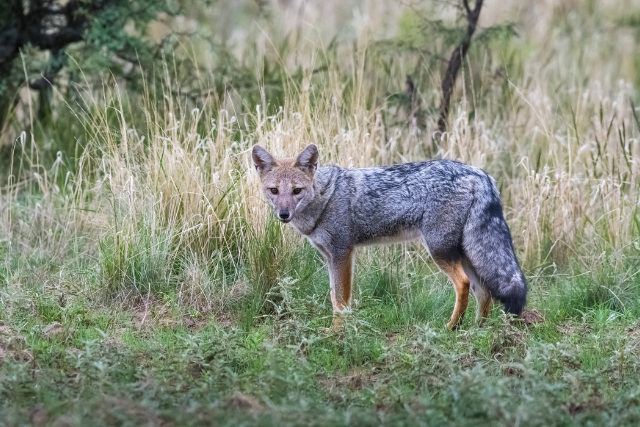
The first known case of a fox-dog hybrid was between a dog and a pampas fox in southern Brazil. The female hybrid, nicknamed Dogxim, had 76 chromosomes and died about two years after she was found, from unknown causes.
The pampas fox belongs to the genus Lycalopex, which is separated from dogs by roughly 6.7 million years of evolution. It isn’t a true fox.
What if Foxes and Dogs Breed?
If fox-dog hybrids occur at all, they are extremely rare. Foxes and dogs share the family Canidae, but they belong to different genera.
That gap makes a successful cross very unlikely.
The only documented success involved a pampas fox, which has 74 chromosomes. That is far closer to a dog’s 78 than a red fox’s 34.
Even if a fox and a dog did produce offspring, mismatched chromosomes would likely leave the hybrid with reduced fertility or health issues.
In many places, keeping a wild animal like a fox as a pet or intentionally breeding fox-dog hybrids may be subject to legal restrictions or regulations due to concerns about wildlife conservation, animal welfare, and potential health risks.
Facts about the Canidae Family
The Canidae family, commonly known as canids, is a diverse and fascinating family of mammals. It has different species, from domestic dogs and wolves to foxes and jackals.
The Canidae family has three subfamilies: Caninae, plus the extinct Hesperocyoninae and Borophaginae.
Every living canid, from the domestic dog and wolf to foxes and jackals, belongs to Caninae.
Canids share several common physical characteristics. For example, they have elongated snouts, sharp teeth adapted for carnivorous diets, a sharp sense of smell and hearing, and strong legs for escaping predators and hunting.
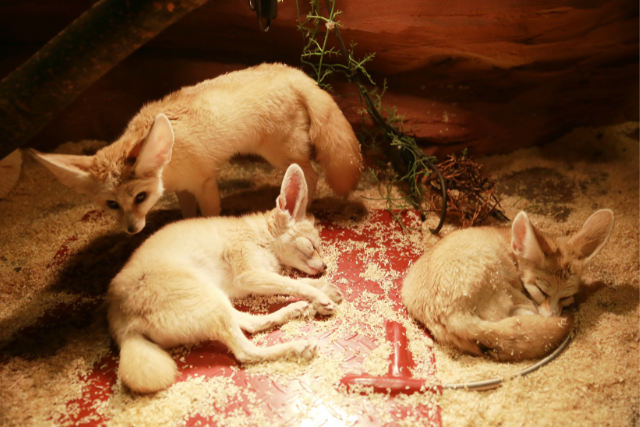
Their fur varies widely among species, ranging from the dense coats of Arctic wolves to the sleek appearance of desert foxes. Canids also have a long, bushy tail, which often plays a role in communication and balance.
Further, canids are incredibly adaptable and inhabit forests, grasslands, deserts, mountains, and urban areas.
They display a variety of social structures. Wolves, for example, have complex pack structures, with individuals cooperating in hunting and raising offspring.
Domestic dogs also exhibit social behavior, often forming strong bonds with humans and other dogs. Foxes, in contrast, are generally more solitary, although some species exhibit varying degrees of social behavior.
These mammals are carnivorous, which means they primarily eat meat. Their diet includes a wide range of prey, from small mammals and birds to larger herbivores. Domestic dogs, however, have more varied diets due to their long history of interaction with humans and may consume plant matter.
Most canids have a similar reproductive system, with females giving birth. The size of litters and breeding seasons can vary among species. Wild canids such as wolves and foxes usually breed once a year, while domestic dogs can come into heat at any time of year.
Conclusion
So, can foxes breed with dogs?
Only in one known case, and not with a true fox. Dogs and foxes are different species with a significant genetic gap that may affect the resulting hybrid. Selective breeding of dogs eliminates undesired traits, but there hasn’t been much research on foxes.
Moreover, significant differences in the timing and regulation of reproductive cycles between dogs and foxes make such interbreeding unlikely. While there was one natural crossbreed of a pampas fox and a dog in the wild, the hybrid died about two years after she was found.
FAQs
Can a dog breed with a coyote?
Yes, dogs and coyotes can interbreed and produce offspring, known as coydogs. One such example is a pitbull and coyote hybrid.
Is a chihuahua related to a fennec fox?
No. The Chihuahua is a domestic dog that descends from wolves like every other breed. Its big ears and small size can look fox-like, but it has no fox ancestry.
Is a Shiba Inu a fox?
No, a Shiba Inu isn’t a fox. While it shares some physical similarities with the red fox, this companion dog isn’t a fox.
Sources
- Meet ‘Dogxim,’ the world’s first known dog-fox hybrid, National Geographic
- Karyotype and Presence of B-Chromosomes in Red Fox from Central Anatolia, Hacettepe Journal of Biology and Chemistry
- Estrous Cycles in Dogs, VCA Animal Hospitals
- Vulpes vulpes (red fox), Animal Diversity Web, University of Michigan